Artificial Intelligence in the ICU: How AI Is Transforming Critical Care Monitoring and Nursing Practice
By Intellieicu
Introduction
An Intensive Care Unit (ICU) is one of the most demanding environments in a hospital. Doctors and nurses continuously monitor critically ill patients, interpret clinical information and make important decisions within limited time.
From vital signs and laboratory reports to ventilator parameters and medication records, ICU professionals handle large amounts of patient data every day.
This is where Artificial Intelligence (AI) in the ICU is gaining attention.
Artificial intelligence is being explored to support patient monitoring, identify patterns in clinical data, assist with early warning systems and improve clinical workflows. These technologies may help healthcare professionals access relevant information and recognize potential concerns more efficiently.
As healthcare technology continues to develop, understanding AI in critical care is becoming increasingly important for doctors, nurses and other healthcare professionals.
But how exactly can AI support an ICU team? What are its benefits, limitations and possible applications in everyday critical care?
Let’s explore.
What Is Artificial Intelligence in the ICU?
Artificial Intelligence in the ICU refers to the use of computer-based technologies that analyse clinical information, identify patterns and provide insights that may support healthcare professionals.
AI systems can process different types of information, including:
Heart rate and blood pressure
Oxygen saturation
Respiratory rate
Laboratory test results
Electronic health records
Patient monitoring data
Ventilator-related information
Clinical documentation
Based on the data available, some AI systems can identify patterns, estimate risks or generate alerts for clinical review.
For example, an AI-based monitoring system may analyse changes in a patient’s vital signs and flag a pattern that could indicate possible deterioration.
However, AI does not replace clinical assessment. Doctors and nurses remain responsible for interpreting findings and making appropriate patient-care decisions.
How Is AI Used in Critical Care?
Artificial intelligence has several potential applications in modern intensive care units.
1. Early Detection of Patient Deterioration
Recognizing early signs of deterioration is an important part of ICU care.
Changes in heart rate, blood pressure, oxygen saturation and respiratory rate may indicate that a patient’s condition is changing.
AI-based early warning systems can analyse multiple patient parameters and identify patterns that may require attention.
Potential applications include:
Identifying abnormal trends in vital signs.
Flagging changes that may require clinical review.
Supporting risk assessment.
Helping prioritize patients for closer observation.
These systems should support, not replace, regular bedside monitoring and clinical assessment.
2. AI in Sepsis Prediction
Sepsis is a serious medical condition that requires timely recognition and treatment.
AI-based predictive models are being studied to analyse patient information and identify patterns associated with an increased risk of sepsis.
Such systems may use information such as:
Heart rate
Blood pressure
Temperature
Respiratory rate
White blood cell count
Laboratory results
Relevant clinical history
The purpose is to provide an additional source of information that may support clinical assessment.
An AI alert alone cannot diagnose sepsis. Diagnosis and treatment decisions must be based on the patient’s complete clinical condition and established medical protocols.
3. AI in Ventilator Monitoring
Mechanical ventilation is an essential part of managing many critically ill patients.
Ventilator management requires continuous observation of respiratory parameters and regular assessment of the patient’s response.
AI and machine-learning technologies are being explored to support:
- Analysis of respiratory trends.
Identification of unusual ventilator patterns.
Monitoring of selected respiratory parameters.
Decision support for ventilation-related assessments.
Analysis of patient-ventilator interactions.
These applications are still developing, and ventilator adjustments must remain under qualified clinical supervision.
4. AI in Hemodynamic Monitoring
Hemodynamic monitoring helps healthcare professionals understand the cardiovascular status of critically ill patients.
ICU teams regularly assess parameters such as:
Heart rate
Blood pressure
Mean arterial pressure (MAP)
Central venous pressure (CVP), when monitored
Cardiac output
Other relevant perfusion indicators
AI-based systems may help analyse multiple parameters together, identify trends and highlight information that requires further review.
However, hemodynamic interpretation requires clinical knowledge and consideration of the patient’s overall condition.
5. Predicting Acute Kidney Injury
Acute Kidney Injury (AKI) is a common concern in critically ill patients.
Changes in serum creatinine, urine output and other clinical parameters can help healthcare professionals assess kidney function.
AI-based prediction models are being researched to identify patients who may be at increased risk of developing AKI.
Potential applications include:
Analysing changes in laboratory values.
Reviewing urine output trends.
Identifying relevant risk factors.
Supporting closer monitoring of high-risk patients
AI-generated risk estimates should always be interpreted alongside clinical findings and appropriate investigations.
Benefits of Artificial Intelligence in ICU Monitoring
When appropriately designed, clinically validated and integrated into hospital workflows, AI tools may offer several advantages.
1. Support for Continuous Patient Monitoring
ICU patients require continuous observation. AI systems can analyse selected streams of patient information and highlight patterns that may need attention.
2. Better Organization of Clinical Information
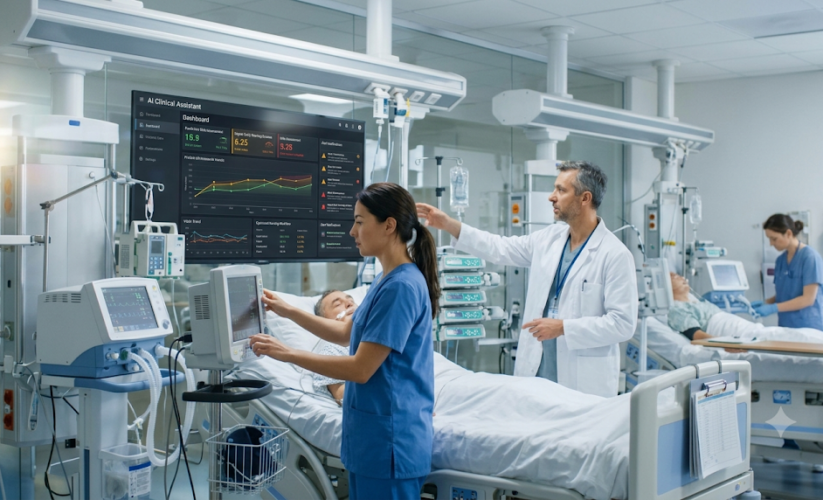
ICU teams work with information from multiple monitors, laboratory systems and patient records. AI-based dashboards may help organize relevant information in a more accessible format.
3. Support for Early Risk Identification
Predictive analytics may help identify patients who could be at increased risk of certain complications, allowing clinicians to review the available information.
4. Workflow Assistance
Some AI applications are being explored for documentation support, data organization and administrative tasks.
This may help reduce repetitive work, although actual benefits depend on the system and its integration into clinical practice.
5. Support for Clinical Decision-Making
AI tools can provide additional information for doctors and nurses. However, final decisions must be based on clinical judgment, patient assessment and established protocols.
AI in Critical Care Nursing: What Should ICU Nurses Know?
ICU nurses play a central role in continuous patient monitoring and bedside care.
They observe changes in patient condition, monitor vital signs, administer prescribed treatments, document clinical information and communicate concerns to the medical team.
As AI technology develops, critical care nurses may increasingly interact with AI-supported monitoring and decision-support systems.
Some important areas include:
Understanding AI Alerts: Nurses should understand what an alert represents and why further clinical assessment may be needed.
Interpreting Patient Trends: Recognizing changes in vital signs and monitoring parameters remains an essential nursing skill.
Clinical Communication: Important observations and changes in patient condition must be communicated clearly to the treating team.
Data Accuracy: Accurate documentation and correct patient information are important for reliable digital systems.
Human Clinical Judgment: AI recommendations should never replace professional assessment, nursing observation or established escalation protocols.
Technology can support ICU nursing practice, but strong clinical knowledge remains essential.
AI in ICU vs Traditional ICU Monitoring
AI-supported monitoring adds analytical capabilities to existing patient-monitoring systems. It does not make traditional bedside monitoring unnecessary.
| Traditional ICU Monitoring | AI-Supported ICU Monitoring |
|---|---|
| Healthcare professionals observe patient parameters | Software can analyse selected patient data |
| Trends are reviewed by the clinical team | Algorithms may identify patterns in available data |
| Clinical alerts are generated by monitoring devices | AI tools may provide additional risk alerts |
| Decisions depend on clinical assessment | AI may provide additional decision-support information |
| Bedside monitoring remains essential | Bedside monitoring remains essential |
Both approaches can work together. AI should complement the skills and experience of ICU professionals.
Challenges and Limitations of AI in Critical Care
Although AI has significant potential, its use in intensive care also presents important challenges.
1. Data Accuracy and Quality
AI systems depend on the quality of the information they receive. Incomplete, inaccurate or inconsistent patient data can affect the reliability of their outputs.
2. False Alerts and Alarm Fatigue
Too many alerts can increase workload and make it difficult for healthcare professionals to identify the most important warnings.
AI systems must be carefully designed and evaluated to avoid unnecessary alerts.
3. Patient Privacy and Data Security
ICU systems handle sensitive patient information. Healthcare organizations must use appropriate security measures, access controls and data protection practices.
4. Lack of Clinical Validation
A model that performs well in a research environment may not perform equally well in every hospital.
AI tools require appropriate clinical validation before being relied upon in real-world patient care.
5. Overdependence on Technology
Healthcare professionals should not accept AI-generated recommendations without evaluating the patient’s condition.
Clinical judgment, experience and bedside assessment remain essential.
6. Training and Technical Knowledge
Doctors and nurses need appropriate training to understand how AI systems work, interpret their outputs and recognize their limitations.
Will Artificial Intelligence Replace ICU Doctors and Nurses?
No. Artificial intelligence is intended to support healthcare professionals, not replace them.
Critical care involves much more than analysing numbers or identifying patterns.
Doctors and nurses must assess patients physically, understand complex medical conditions, communicate with families, make treatment decisions and respond to emergencies.
AI may help with specific tasks such as data analysis, risk prediction and workflow support, but it cannot independently provide the full range of clinical care required by critically ill patients.
The future of critical care is more likely to involve collaboration between trained healthcare professionals and appropriately validated technology.
Why ICU Professionals Need to Keep Learning About New Technologies
Modern intensive care is continuously evolving. Along with traditional clinical knowledge, healthcare professionals increasingly need to understand digital monitoring systems and technology-supported workflows.
Some important skills for modern ICU practice include:
ECG interpretation
ABG analysis
Mechanical ventilation
Hemodynamic monitoring
Understanding vital signs and patient trends
Recognition of clinical deterioration
Critical care documentation
Digital patient monitoring
Clinical communication and teamwork
Learning these fundamentals helps healthcare professionals interpret clinical information confidently, whether it comes from a traditional monitoring device or an AI-supported system.
The Future of Artificial Intelligence in Intensive Care Units
AI research in critical care is expanding across several areas.
Future developments may include:
More Advanced Predictive Monitoring
AI models may become more capable of analysing multiple patient parameters and identifying patterns that need clinical attention.
Personalized Clinical Decision Support
Future systems may use patient-specific information to provide more relevant risk assessments and decision-support insights.
Improved ICU Dashboards
Better visualization tools may help healthcare professionals access important patient information without navigating multiple systems.
AI-Assisted Documentation
Some emerging tools may assist with clinical documentation, summarization and administrative workflows, subject to accuracy and privacy safeguards.
Integration With Remote Monitoring
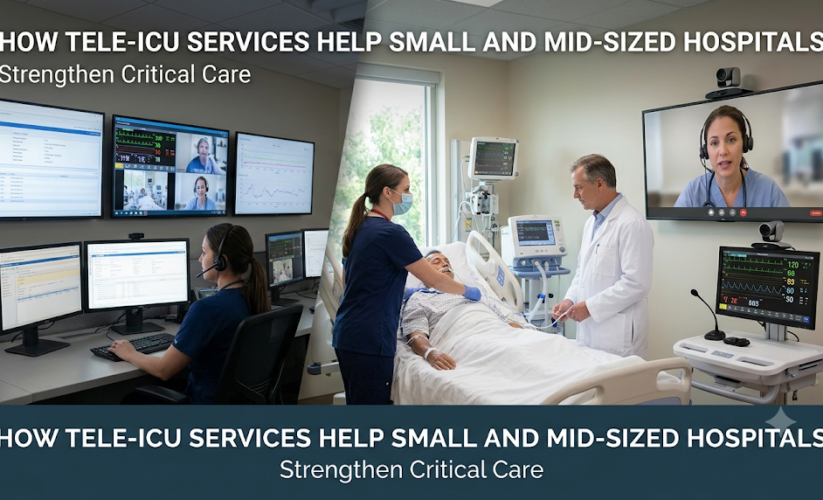
AI may also be integrated with remote patient monitoring and Tele-ICU systems to support clinical information sharing and remote review.
However, widespread clinical adoption will depend on reliable evidence, patient safety, data protection, clinical validation and appropriate human oversight.
Strengthen Your Critical Care Skills With IntellieICU
As intensive care evolves, healthcare professionals need to build strong clinical foundations and stay updated with emerging developments.
Understanding new technologies such as artificial intelligence is valuable, but it is equally important to master the essential skills used in everyday ICU practice.
At IntellieICU, healthcare professionals can explore ICU-focused educational programs designed to strengthen their critical care knowledge.
Explore learning opportunities in:
ECG interpretation
ABG analysis
Mechanical ventilation
Hemodynamic monitoring
ICU fundamentals
Critical care concepts
Whether you are an ICU nurse, doctor or healthcare professional, continuous learning can help you develop confidence and improve your understanding of modern critical care.
Learn. Practice. Improve.
Visit www.intellieicu.com to explore ICU training programs.
Frequently Asked Questions
Q1. What is artificial intelligence in the ICU?
Artificial intelligence in the ICU refers to computer-based technologies that analyse clinical data, identify patterns and provide insights that may support patient monitoring and clinical decision-making.
Q2. How is AI used in critical care?
AI is being explored for early warning systems, sepsis risk prediction, patient monitoring, ventilator-related analysis, hemodynamic monitoring and clinical documentation support.
Q3. Can AI predict patient deterioration in the ICU?
Some AI-based systems are designed to identify patterns associated with clinical deterioration. Their predictions are not guaranteed and require clinical review and appropriate validation.
Q4. How does AI help ICU nurses?
AI may help nurses by organizing patient information, identifying trends and generating alerts for clinical review. It does not replace bedside observation, nursing judgment or patient care responsibilities.
Q5. Can AI replace ICU doctors?
No. AI can support selected clinical tasks, but diagnosis, treatment decisions, physical examination and patient management require qualified healthcare professionals.
Q6. What is an AI-based patient monitoring system?
It is a technology that uses algorithms to analyse selected patient-monitoring data and may identify unusual patterns, trends or potential risks.
Q7. Is AI currently used in all intensive care units?
No. The availability and implementation of AI technologies vary between hospitals. Many applications remain under research, development or clinical evaluation.
Q8. What are the limitations of AI in critical care?
Important limitations include data quality, false alerts, privacy concerns, lack of external validation, workflow integration challenges and the risk of overdependence on automated recommendations.
Q9. What skills should ICU nurses develop for the future?
ICU nurses should continue developing skills in patient assessment, ECG interpretation, ABG analysis, ventilation, hemodynamic monitoring, clinical communication and digital healthcare technologies.
Q10. Where can healthcare professionals learn ICU skills?
Healthcare professionals can explore ICU-focused educational programs at IntellieICU, including learning opportunities in ECG, ABG, ventilation and other critical care subjects.
Conclusion
Artificial intelligence is creating new opportunities in intensive care through predictive analytics, patient monitoring, clinical decision support and workflow assistance.
However, technology alone cannot deliver safe critical care. Its value depends on accurate information, appropriate clinical validation and the knowledge of healthcare professionals using it.
For ICU doctors and nurses, the ability to combine strong clinical fundamentals with an understanding of emerging technologies will remain important.
The future of intensive care is not about replacing healthcare professionals with AI. It is about helping skilled professionals use technology responsibly to support better-informed patient care.
Build your ICU knowledge with IntellieICU.
References and Further Reading
European Society of Intensive Care Medicine: Consensus Statement on Human-Centred Partnership in the ICU (2026)
Expert Consensus on Clinical Application and Governance of Artificial Intelligence in Critical Care Medicine (2026)
Artificial Intelligence in Intensive Care Units: A Scoping Review